
Details
- United States of America
- BaWiSo-23
- Undergraduate
- SoSe 2026
- Time spent at the partner university: 4 months
- Contact: Login to see contact information
Preparing for my exchange semester taught me a few essential travel lessons. Flights can be expensive, so I recommend booking as early as possible and building in extra time for check-in delays. To avoid any issues at the airport, I saved offline PDF copies of my tickets on my phone and printed physical copies just in case. Upon arriving at Boston Logan Airport, taking an Uber is definitely the most comfortable option, but it gets expensive fast. A budget-friendly alternative is taking the bus, such as the MBTA Silver Line SL1, which runs directly from Logan terminals into downtown Boston for free.
My best advice for housing is to simply stay in the campus dorms. At Northeastern, exchange students cannot choose their specific building, but you will be paired with other exchange students, which is a great way to meet people. There are roughly six potential dorm buildings, and all of them are within easy walking distance to campus. Sharing a room with a roommate is standard practice at US universities, and while it takes a little adjusting, it helps you make friends very quickly. Living on campus also keeps you safe and fully immersed in university life. If you ever run into any issues, every residence hall has a Resident Assistant (RA) available to support you. US universities are very well funded when it comes to student services, so you will always have help when you need it.
Academic life at Northeastern is interactive and continuous, which is quite different from the lecture-heavy focus at WU Vienna. Instead of relying on a single final exam, grades are built on weekly readings, presentations, group projects, and active participation. Active engagement makes a huge difference: professors appreciate students who contribute to discussions, and being an active participant can even bump your final grade if you end up on a borderline score. The campus facilities, like Snell Library, offer great collaborative and quiet study spaces to help you keep up with the workload. Engaging in class consistently makes the overall workload much lighter and vastly improves your experience.
for the entire exchange
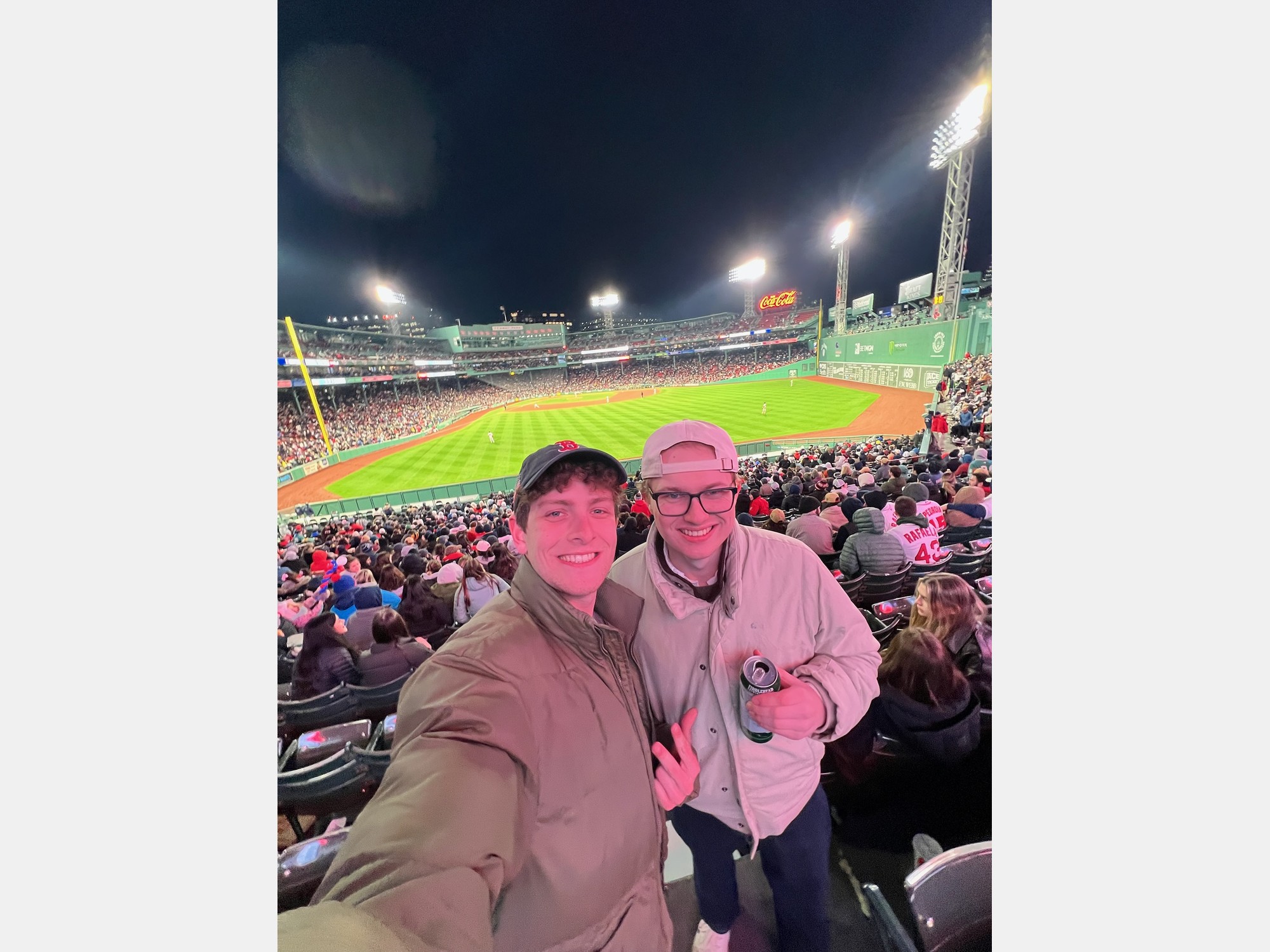
Adjusting to daily life in Boston comes with a few surprises, but overall it is a safe and welcoming city. The local population is open, friendly, and hugely enthusiastic about sports, making games for the Red Sox, Celtics, or Northeastern’s own Huskies major social events. Public transport (the MBTA "T") is convenient, though you should pack heavy winter gear since temperatures drop significantly at the start of the year. Overall expenses are noticeably higher than back home, and the nightlife takes some getting used to because bars and venues close early around 1:00 AM. To save money on daily living, I highly recommend purchasing a university meal plan. It grants access to campus dining halls where you can eat buffet-style three times a day, which keeps your food budget predictable.
My exchange semester was an unforgettable experience defined by incredible friendships and deep cultural immersion. Being in Boston meant being surrounded by world-class institutions across arts, music, and science, creating an inspiring and academically rich environment. Ultimately, it was the combination of the vibrant city atmosphere, inspiring peers, and lifelong connections that made my time abroad truly special.