
Details
- Portugal
- MAEXINT-24
- Graduate
- WS 2025
- Time spent at the partner university: 4 months
- Contact: Login to see contact information

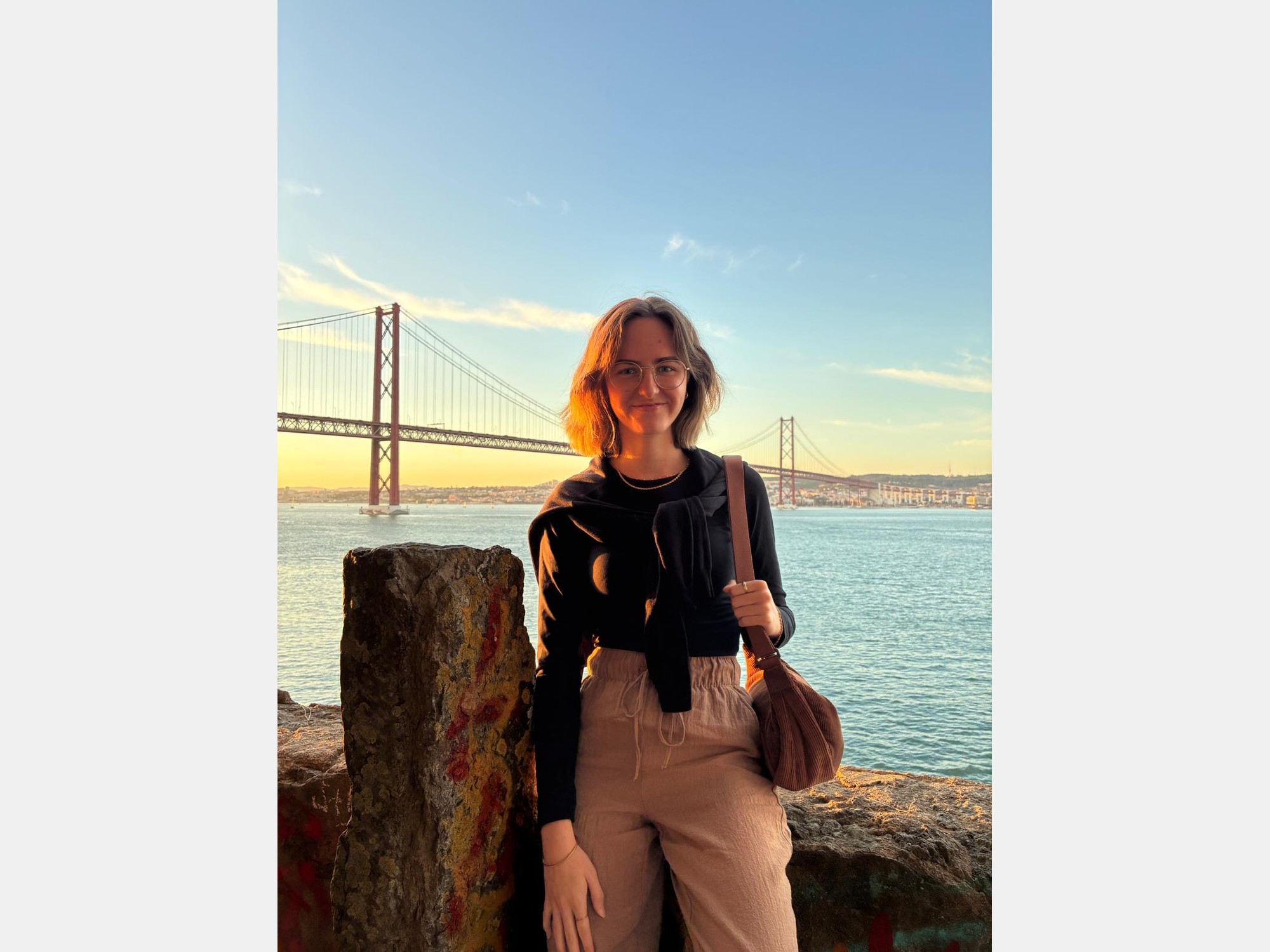
I knew that I would like to go to Portugal, so I ranked three Portuguese universities in the top three places on my list. Fortunately, I was accepted to Lisbon. To prepare, I saved money for my shared flat in Portugal (Portugal has a very precarious housing situation), I took care of my Erasmus+ grant and learning agreement, and researched which courses would be suitable for me. Then I started looking for accommodation early on and leafed through a travel guide to get my bearings. I joined WhatsApp groups where I received useful information and prepared some documents that I wanted to take with me for my stay abroad.
As already mentioned, Portugal has a very precarious housing situation. I found my room in a shared flat through an agency (YUP). The agency was linked on the website of my Portuguese partner university. I pay €750 per month for my room in a shared flat with seven people, which is not cheap. I live in Saldanha, which is a very safe working and residential area of Lisbon. I either took the metro and then walked to the university (about 35-45 minutes in total) or took an Uber (about 15 minutes). I already knew that I would have to start looking for a flat early, but I didn't expect rents to be so expensive in Lisbon. That's really something to consider. Also, shared flats here in Portugal are very large, meaning you live with a lot of people.
In my opinion, the ISEG campus is not as modern as the WU. In the winter semester, it is also relatively cold in the lecture halls. Unfortunately, the toilet facilities are also an adventure in themselves. There is a canteen offering inexpensive meals (taste is a matter of personal preference) and a small snack shop. There is a printer room and an ISEG shop. As I said, the classrooms are not very modern. I found the teachers to be extremely nice and helpful, and they were often willing to go the extra mile for their students. I could always ask for help if I didn't understand something, and most of them were also quite quick to respond to emails. I would say that the level of difficulty was slightly easier than at WU, but the amount of material really should not be underestimated. I was surprised at how much I ended up learning. In addition, the exams were quite close together. I was supposed to take six exams within two weeks in December, but in the end I postponed two of these six exams to January, which in turn counts as a second attempt or re-assessment phase.
for the entire exchange
Public transport is reasonably well developed. Buses are unreliable. There were times when I actually waited up to 40 minutes for a bus. If possible, use the metro. Uber is also good, inexpensive and safe. I felt very safe in Portugal and Lisbon, but I was also told that there are two metro stations that should be avoided: Martim Moniz and Interdente. There are, of course, a variety of good places to eat in Lisbon. Otherwise, I did activities such as boat trips, hiking in and around Lisbon, exploring different parks, visiting museums, etc. I didn't do any sports myself here, but we were told that the Universidade de Lisboa offers many sports facilities. There are two student organisations, ESN and ELL, which regularly organise activities and excursions. In terms of excursions, there is a lot to experience within a two-hour radius of Lisbon, and of course I also spent a lot of time at the beach.
I am proud to have spent a semester abroad. I think Portugal was a highly desirable destination. I had the opportunity to get to know different cultures and was in a very international environment, which constantly broadened my world view. It was interesting to see the different teaching styles of the lecturers and, ultimately, I am happy with what I learned and my grade point average. I was particularly lucky with my flatmates, who I became friends with and spent Christmas and New Year's Eve with.