
Details
- Switzerland
- MAWiRe-21
- Graduate
- SoSe 2026
- Time spent at the partner university: 5 months
- Contact: Login to see contact information

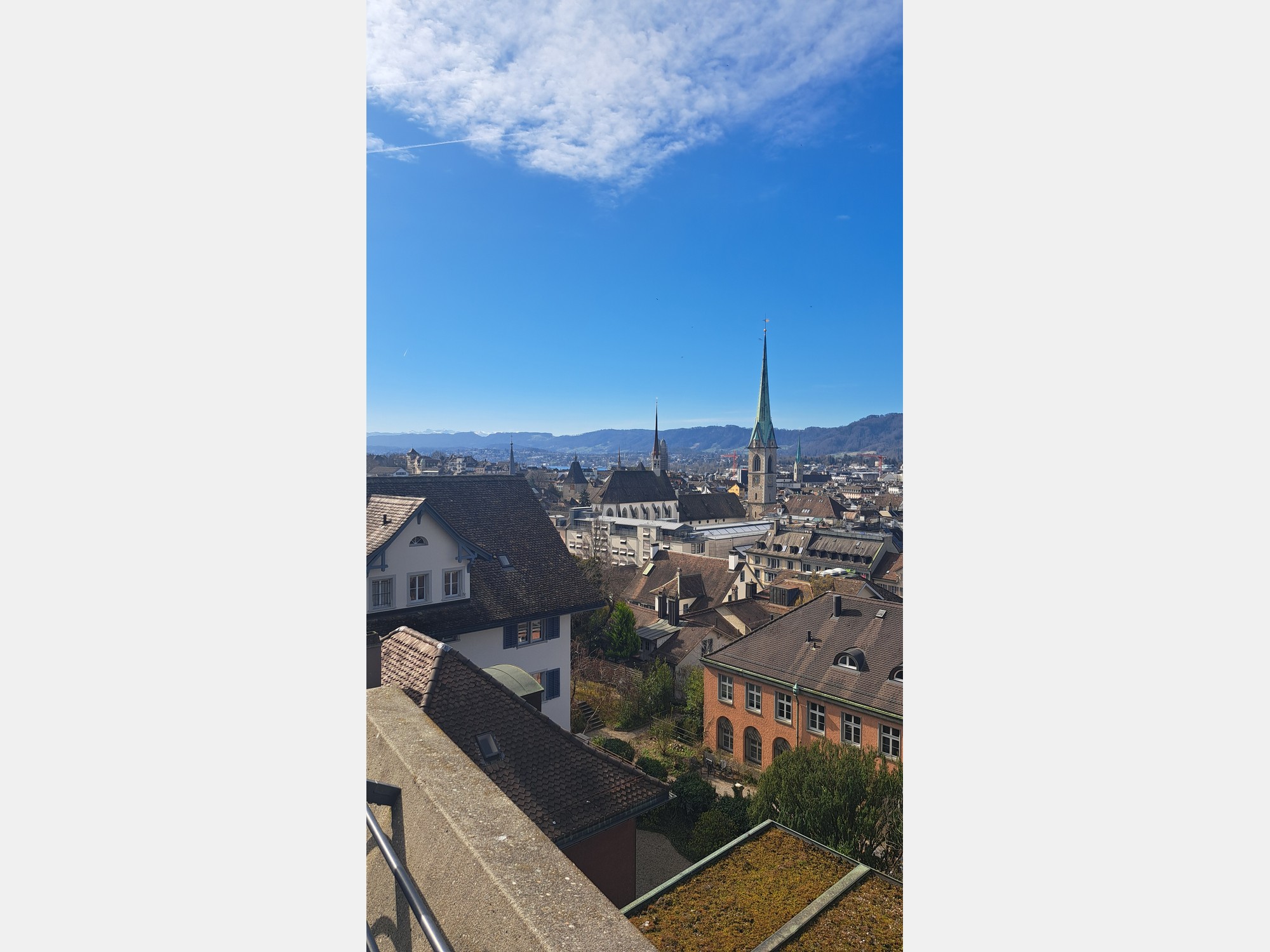

I found the preparations very straightforward, as the University of Zurich’s Incoming Team kept me well informed via email on a regular basis. The only thing that wasn’t communicated very clearly was the accommodation situation. The rejection for university accommodation came quite late, so I had very little time to find a flat. However, I managed to find a room in a shared flat fairly quickly via the Flatfox website. It’s best to contact as many shared flats as possible, as you only need the room for a limited time, so you’ll get a reply relatively quickly. I also booked my appointment at the immigration office whilst still in Austria, which I was then able to attend on my very first day in Zurich. You need a residence permit as a student. I travelled to Zurich itself by train, as it’s the cheapest option with my Klimaticket and there’s also a direct connection from Vienna to Zurich.
As I mentioned earlier, I found a room in a shared flat via the Flatfox website, although I did contact at least 40 different flats. The tenancy went smoothly as my sub-landlord was also spending a semester abroad during the same period. It was certainly an exciting experience as I’d never lived in a shared flat before, but life in the flat worked out well nonetheless. The flat share was in Schwammedingen, which is more of a suburb. The area was quiet and well connected; I could get to uni in 20 minutes by tram and, with just one change, reach the station and the city centre in 25 minutes. I also cycled a lot, though this was quite tiring as the Züriberg lay between my flat and the uni and I had to cycle up part of it. Zurich is a small city and a far more expensive one, but I never had any safety concerns, mainly because you can easily leave your laptop unattended in the library for a while. What you probably already know but still don’t think about beforehand is that Switzerland has different plug sockets and that there’s no roaming. I would therefore recommend buying an adapter and, as I did, adding an extra 2 GB per week to your mobile plan for non-EU countries.
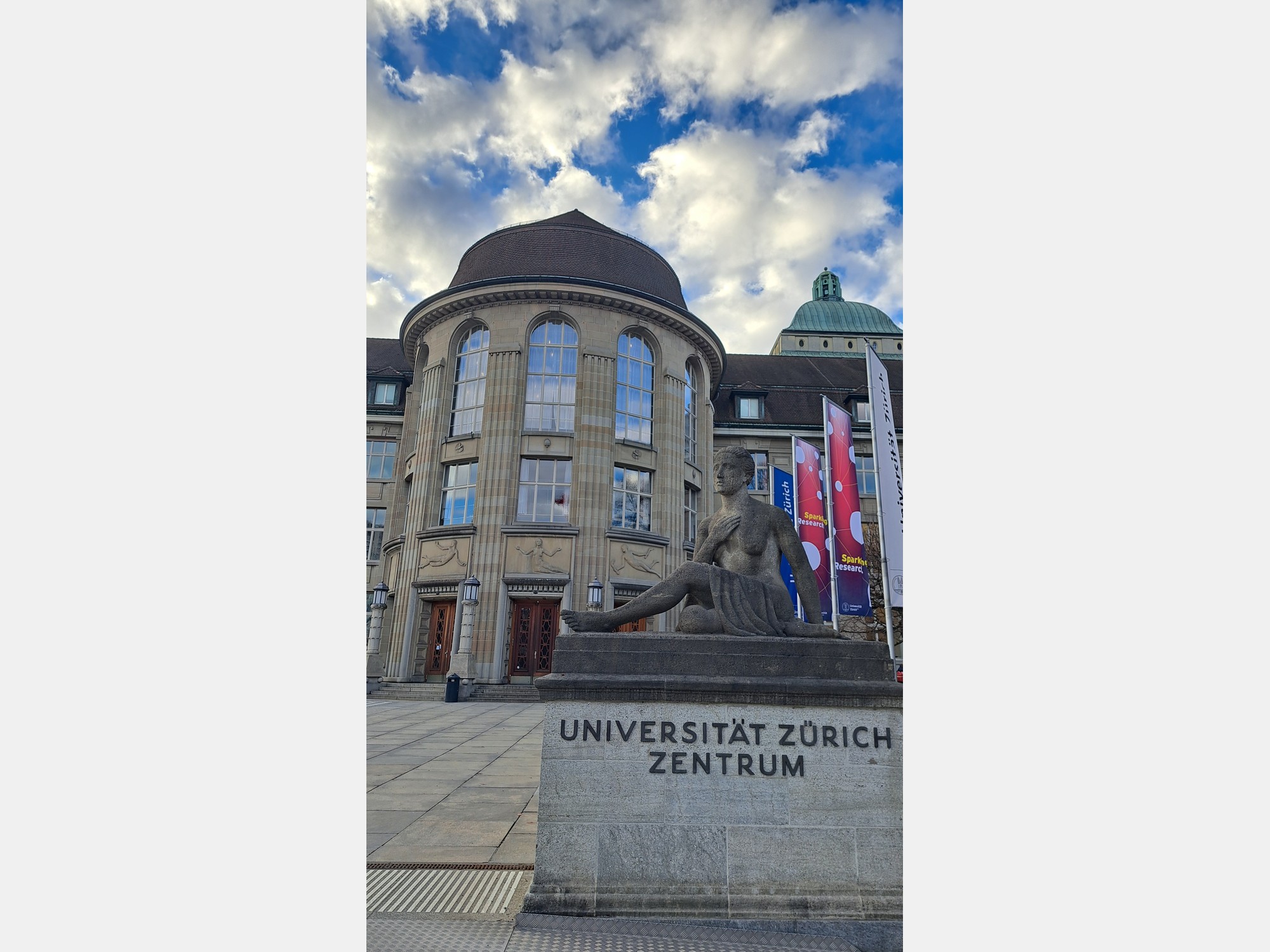
The University of Zurich is very different from WU Vienna. The university buildings are much older, and you can really tell. On the one hand, this is lovely, as I find the classical architecture of the University of Zurich’s buildings very attractive; on the other hand, it can also be a bit of a struggle, as the older lecture theatres in particular can be small and cramped. The Faculty of Law library is unique and very large, yet there aren’t that many study spaces. The canteen isn’t much more expensive than the one at WU, though there are a great many different canteens. The courses are very different from those at WU. There is virtually no compulsory attendance and no participation marks. Most lectures are also recorded as video podcasts, which is very handy if you can’t make it to the lecture. Generally speaking, you have much more freedom at the University of Zurich when it comes to deciding how to prepare for an exam. The teaching staff are very accommodating. I mainly took mobility exams and therefore usually had to arrange extra appointments with the professors for oral exams; this worked very well. Mobility exams are exams held specifically for international students; these usually take place at the end of the lecture term in late May, as the regular exam period does not begin until late June/early July. This ensures that international students do not have to extend their stay in Zurich by another one or two months, as the cost of living in Zurich is high.The exams itself were challenging but manageable. Unfortunately, it is not always entirely clear how to achieve a pass, particularly in the subjects where I had to submit an essay and a presentation as evidence of my work. I find the grading system at WU to be more transparent. I took the following courses at UZH: History of Business Law (German), Research Methods (German), Tax Law 1 (German), History of International Law (English), International Criminal Law (English) and Comparative Administrative Law (English). I would particularly recommend History of Economic Law with Professor Thier and Comparative Administrative Law with Professor Uhlmann. History of Economic Law is structured in a very interesting way and Comparative Administrative Law is very interactive, providing a good overview of the different national administrative legal systems.
for the entire exchange
Zurich has an efficient public transport system. Although there are only buses and trams, given the size of Zurich, nothing more is really needed. The transport is clean and safe. This also applies to the city of Zurich itself. As the city is one of the most expensive in the world, the security situation is excellent; there was actually never a time when I felt even remotely unsafe. The Swiss rail system is also excellent. It’s also worth taking day trips to other parts of Switzerland; for example, I went to Bern for a football match. You can also get to the mountains extremely quickly, where there’s plenty of good hiking. There are some fantastic museums in Zurich, which are usually cheaper for students. Eating out and going out is unfortunately very expensive, so I tended to cover this by attending events organised by the student societies in Zurich; there are plenty of these at UZH and ETH, and there are effectively several events every week. I can particularly recommend the Austrian Students’ Club (KÖS). The best thing in Zurich, though, is the Academic Sports Association of Zurich (ASVZ). As a student, you can become a member for free. In addition to excellent sports facilities, such as gyms at several UZH and ETH campuses, the ASVZ also offers a varied range of sports activities, almost all of which are free of charge. I’ve been making the most of this to play football; there was a session on offer almost every day. On top of that, I’ve also been playing in an internal university football league with my uni friends. However, there are also sessions available almost every day for virtually every other sport. I’d love to see something like that in Vienna too.
Zurich was a wonderful experience. I’m really taken with the city. The university looks after its students well, whilst still giving them the freedom to prepare for exams and other academic work in their own way. Even though the cost of living there is very high, which can be a challenge for a student, I would make the decision to spend a semester abroad again in a heartbeat.